
Why is it called a Warré Hive?
A French priest enters the chat.
The Warré hive is named after Émile Warré, a French parish priest, beekeeper, and, by every account, a prolific tinkerer. He spent decades studying how bees actually behave and testing hive design against it. By 1948, he'd been keeping bees for more than thirty years and had managed 350 different hives along the way, chasing one question: what design is natural for the bees and still practical for the person taking care of them. He kept a dog by his side through most of it, which has nothing to do with the hive but felt worth mentioning.
A vertical box that grows in a new way.
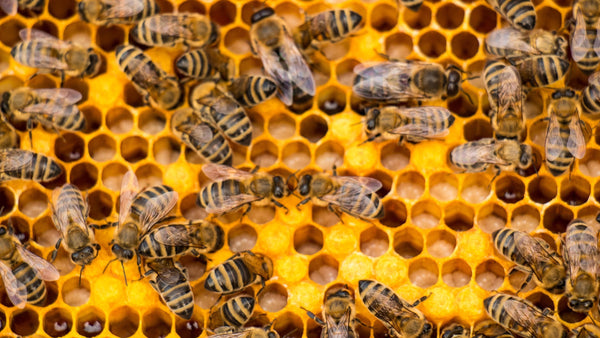
A Warré is a stack of small square boxes, each with wooden bars across the top instead of frames or foundation. Bees hang comb from the bars inside the stacked boxes.
Every hive that stacks boxes has to decide which way to grow, and until Warré, "up" was the only answer. A Langstroth adds new boxes on top as the colony fills what's below it. Warré flipped that. New boxes go underneath the existing stack, a process called nadiring, and the colony builds downward into the fresh space the same way a colony would spread down the inside of a hollow tree. It's the closest thing a wooden box gets to the shape bees already knew before anyone built them one.
Warré wasn't just solving for geometry. He was solving for the keeper too.
His design assumes you're watching the entrance more than you're opening the hive, checking on the colony from the outside, and stepping in only when there's a real reason to. Some Warré keepers open the hive once or twice a season. That's not neglect. It's the design working as intended.
He called it "The People's Hive." The goal was a hive anyone could keep, not just a specialist with a shed full of equipment. The name Warré hive came later, attached by everyone else to the man who wouldn't stop refining it. His books are still in print, still read, still shaping how people think about hives that leave bees mostly alone.