
How to Help Bees through the Summer Nectar Dearth
Late July can feel a little strange at the hive. The entrance is quieter. Fewer bees are returning loaded with nectar. More guard bees seem to be standing watch. It can feel like something is wrong, but for most of the country, this is a completely normal part of the season. Welcome to the summer nectar dearth.
What is a nectar dearth?
A nectar dearth is a stretch of the season when incoming nectar no longer exceeds a colony's daily needs. The bees shift from collecting surplus food to carefully managing the stores they've already built.
Flowers may still be blooming, but many of the biggest nectar producers have finished, while the next wave hasn't started yet. Heat and drought often make things worse. A plant under water stress may continue to flower while producing very little nectar. A summer dearth is a normal part of the beekeeping season, not a sign that something is wrong with your colony.
The exact timing varies from place to place. Many areas experience it sometime between midsummer and early fall, and it usually ends when late-season plants like goldenrod and asters begin blooming in zones where they naturally grow.
What should beekeepers watch for?
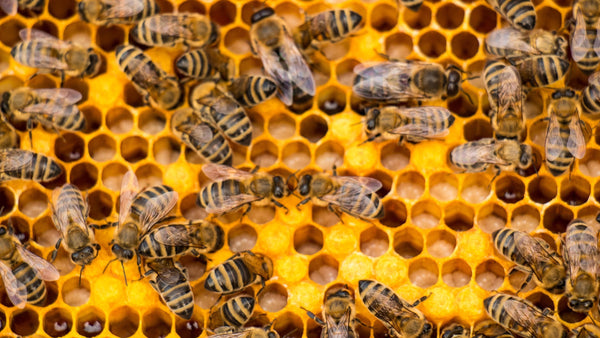
One of the biggest surprises for new beekeepers is that a quiet hive isn't necessarily an unhealthy hive. Bearding on hot afternoons is completely normal and doesn't automatically mean the colony is struggling. The bees are simply helping cool the hive by spending time outside.
The bigger concern during a nectar dearth is robbing. When nectar becomes scarce, stronger colonies sometimes steal honey from weaker ones. Early signs include bees darting back and forth in quick zig-zag flights near the entrance, fighting on the landing board, or small pieces of wax scattered outside the hive. Once robbing begins, a strong colony can overwhelm a weaker one surprisingly quickly.
If you suspect robbing, reduce the entrance, avoid open feeding, and use an internal or top feeder if supplemental feeding is truly necessary.
What can help right now?
Provide fresh water. Keep a reliable water source available throughout the summer. A shallow dish filled with pebbles, marbles, or floating corks gives bees a safe place to land while they drink. Placing it where bees can easily discover it (often in a sunny location) can help them find it more quickly.
Reduce heat stress. If your hive sits in intense afternoon sun, providing some shade during prolonged heat waves can reduce stress and lessen excessive bearding.
Leave the honey alone. During a nectar dearth, those capped honey stores become the colony's pantry. Unless your colony has abundant surplus, it's usually best to postpone harvesting until nectar becomes available again.
Keep inspections brief. It's tempting to open the hive "just to check," but every inspection releases the smell of honey and exposed comb into the air. During a nectar dearth, those odors can attract robber bees from nearby colonies. Unless you have a specific reason to inspect, letting the colony work undisturbed is often the better choice.
What you can still plant for fall
Plants started during a summer nectar dearth usually won't bloom soon enough to solve today's shortage. What they will do is provide valuable forage later this season and become well established for next year.
- Zones 3–5 (Upper Midwest, northern New England, interior Mountain West): Aromatic aster and New England aster can still bloom before frost.
- Zones 6–7 (Mid-Atlantic, inland Pacific Northwest, upper South): Anise hyssop, black-eyed Susan, and goldenrod divisions are all good options for extending late-season forage.
- Zones 8–9 (Deep South, coastal Pacific, low desert fringe): Zinnias, cosmos, swamp sunflower, and goldenrod continue to perform well.
-
Zone 10 (South Florida, low desert): Desert marigold and salvias planted now can provide excellent fall bloom.
A local starting point
Plant lists are a starting point, not a script. What thrives depends on your soil, rainfall, elevation, and local climate far more than a hardiness zone alone.
One of the best things you can do is visit a local native plant nursery and ask what's flowering for pollinators in late summer and fall. Whenever possible, choose straight native species over ornamental cultivars bred primarily for appearance.
Every new planting won't completely solve this year's nectar dearth, but it can make next year's a little easier for the bees.