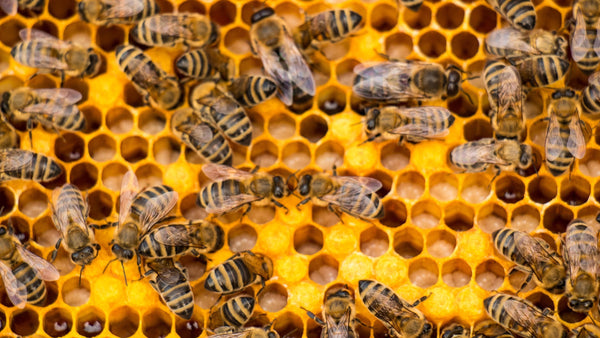

What is nadiring?
Hint: gravity is involved.
Nadiring is a fancy word for a simple idea. It's the beekeeping technique of adding new boxes underneath the existing brood chamber, instead of on top. Pronounced nay-deering. That's the whole concept. Everything else is just where the word came from and why it matters.
Where the word comes from.
Nadir is an astronomy term for the point directly below an observer, the exact opposite of zenith, the point directly above. Borrow that word for a hive and you get nadiring: building down instead of up. It's a small piece of vocabulary that happens to describe exactly what it means, which isn't something you can say about most technical terms.

Nadiring's counterpart: supering.
Beekeepers also talk about supering, adding new boxes on top of the stack. It's the standard approach on a Langstroth hive, and it prioritizes what a Langstroth is built for: easy access and straightforward management. Lift the lid, set a new box on top, done. Nadiring asks more of you. To add a box underneath, you have to lift the entire existing stack, brood chamber and all, off the ground and set the new box beneath it before lowering everything back down. A stack lifter, a simple staging tool, is how most Warré keepers manage this without straining a back.

Warré hives and nadiring.
A Warré hive is built to grow the way a colony would inside a hollow tree: downward, into open space below, rather than upward into a box stacked on top. Nadiring is the mechanic that makes that possible, the actual technique of adding a new box underneath the existing brood chamber instead of above it.
When Emile Warré designed the Warré hive, Langstroth was already the dominant hive in his era, decades old and spreading fast. He studied it directly alongside hundreds of other designs before landing on his own. He kept the Langstroth's stacked-box silhouette but rejected the habit that came with it: opening the hive comb by comb, every couple weeks, to inspect individual frames. Nadiring is part of what allowed him to swap that for something coarser and less frequent; whole boxes handled a couple of times a season instead of frames handled constantly.